Money
How to teach kids about money at every age
How to teach kids about money from preschool to the teenage years: pocket money, saving goals, needs versus wants and the habits that last into adulthood.
 Bitezine Editorial TeamRankings, reviews & guides 5 min read
 AI generated
Knowing how to teach kids about money is less about lectures and more about small, repeated experiences. Children learn what money is by handling it, making choices with it and occasionally getting those choices wrong while the stakes are low.
Research on children's financial habits, including a widely cited study from the University of Cambridge for the UK Money Advice Service, suggests that many basic money habits are already forming by around age seven. That makes the early years a good time to start. This guide walks through what to teach at each stage and how pocket money can do most of the work. It is general information, not financial advice.
Why teaching children about money early matters
Children watch how adults treat money long before they understand numbers. They notice whether purchases are planned or impulsive, whether bills cause stress and whether anyone talks about saving.
Talking openly helps. You do not need to share your salary, but explaining that money comes from work, that it runs out and that choices have trade-offs gives children a framework. Kids who practise with small sums tend to find bigger decisions less intimidating later.
Money lessons for kids aged 3 to 5
Young children can learn that money is exchanged for things and that you sometimes have to wait. Keep it physical and concrete.
- Let them hand coins to a cashier and receive change.
- Play shop at home with real or toy coins.
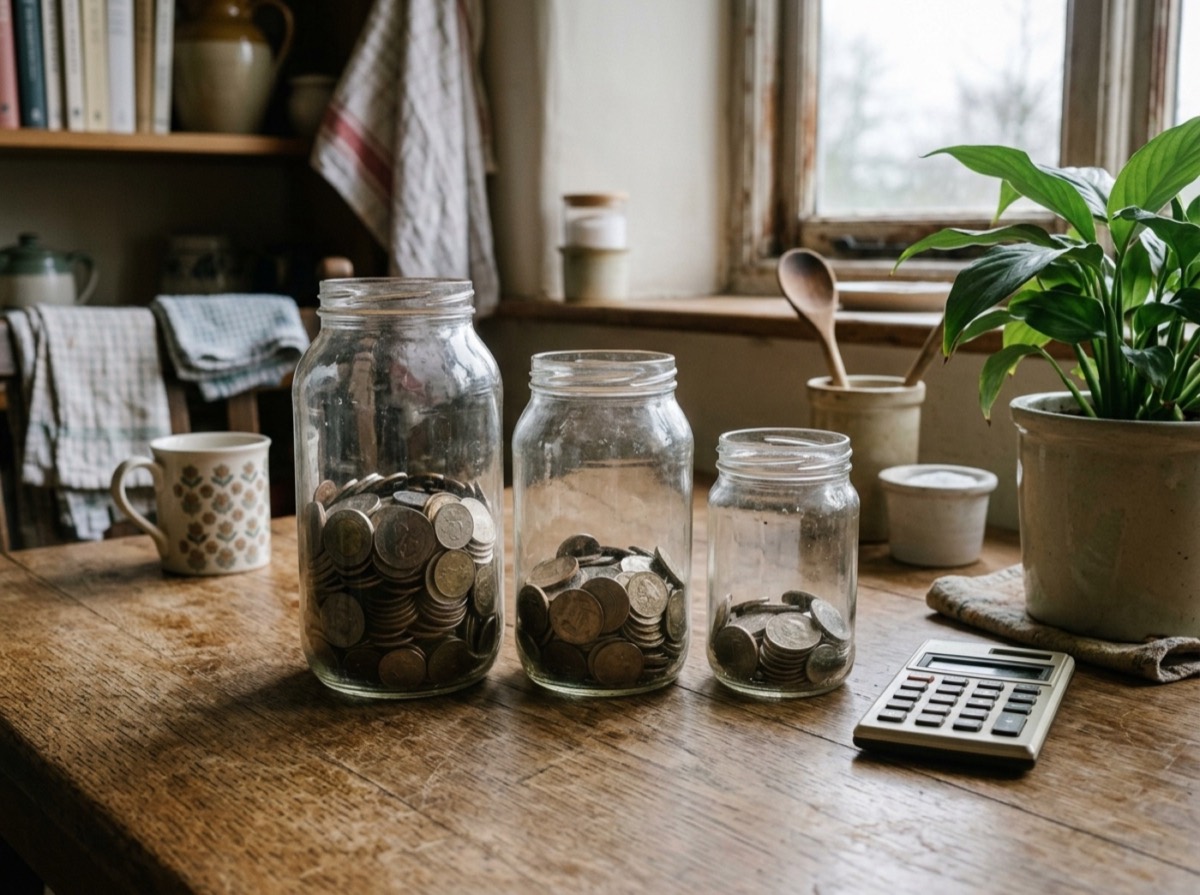
- Use a clear jar so they can see savings grow.
- Practise waiting: if they want something small, save for it over a week or two.
- Name the difference between things we need, like food, and things we want, like a toy.
A child who spends everything on day one learns more than any explanation could teach.
Pocket money by age: how much and how often
Pocket money is the most effective teaching tool most families have, because it gives children real decisions. There is no single correct amount. Many parents start around school age with a small weekly sum and move to a monthly amount in the early teens, which teaches children to spread money over a longer period.
In Germany, youth welfare offices publish non-binding pocket money tables by age that many parents use as a reference point. Whatever amount you choose, consistency matters more than size. Pay on a fixed day, avoid advances and let your child decide how to spend it within family rules.
The hardest part for parents is letting children waste money. A child who spends everything on sweets on day one and then misses out on something they wanted learns more than any explanation could teach.
Should kids earn pocket money for chores?
Families split on this. One view is that pocket money should be a learning allowance with no conditions, while everyday chores are simply part of living in a household. The other view is that tying money to work shows where income comes from.
A common middle path is a basic allowance that is not linked to routine tasks, plus the chance to earn extra for bigger jobs such as washing the car or clearing out the garage. This keeps normal household help from becoming a negotiation.
Teaching saving, spending and giving to kids aged 6 to 12
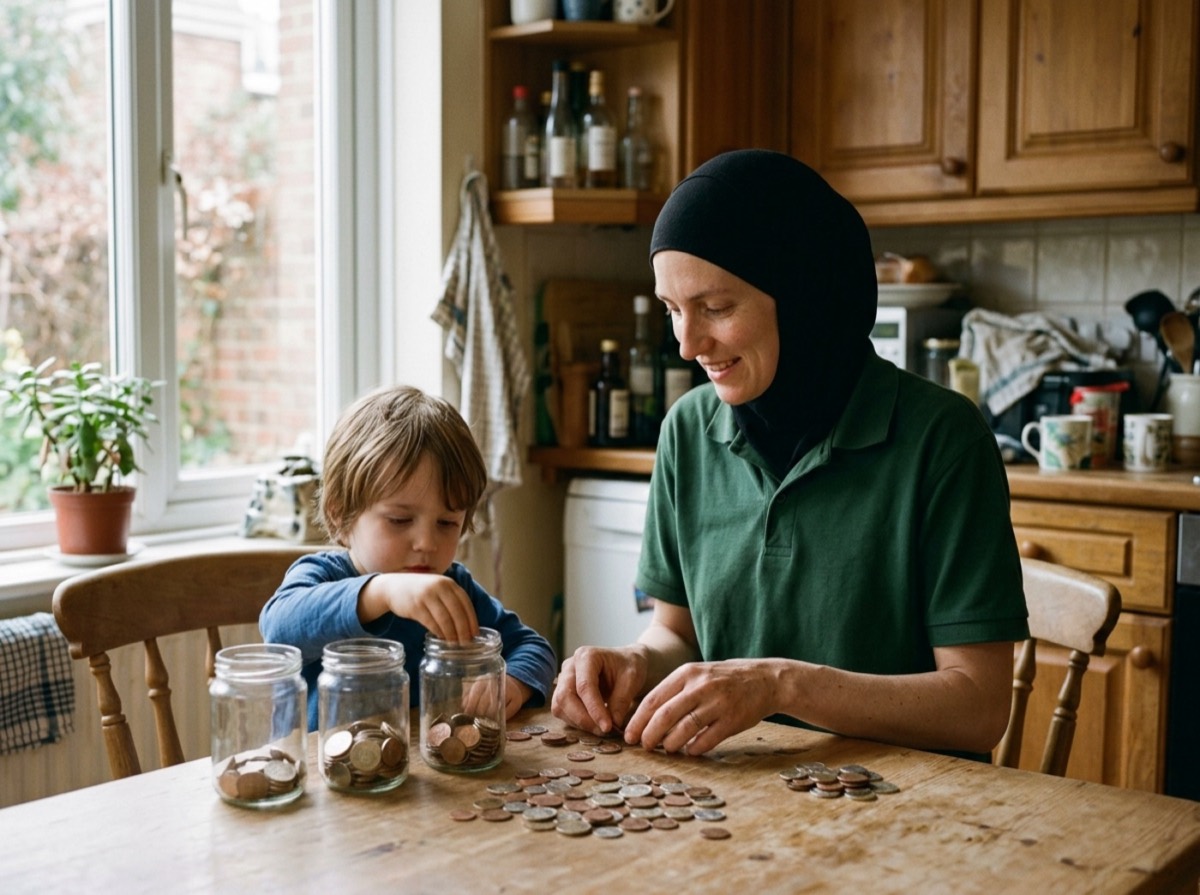
Primary school children can handle simple budgeting. Many families use three jars or envelopes labelled spend, save and give, and split each payment between them.
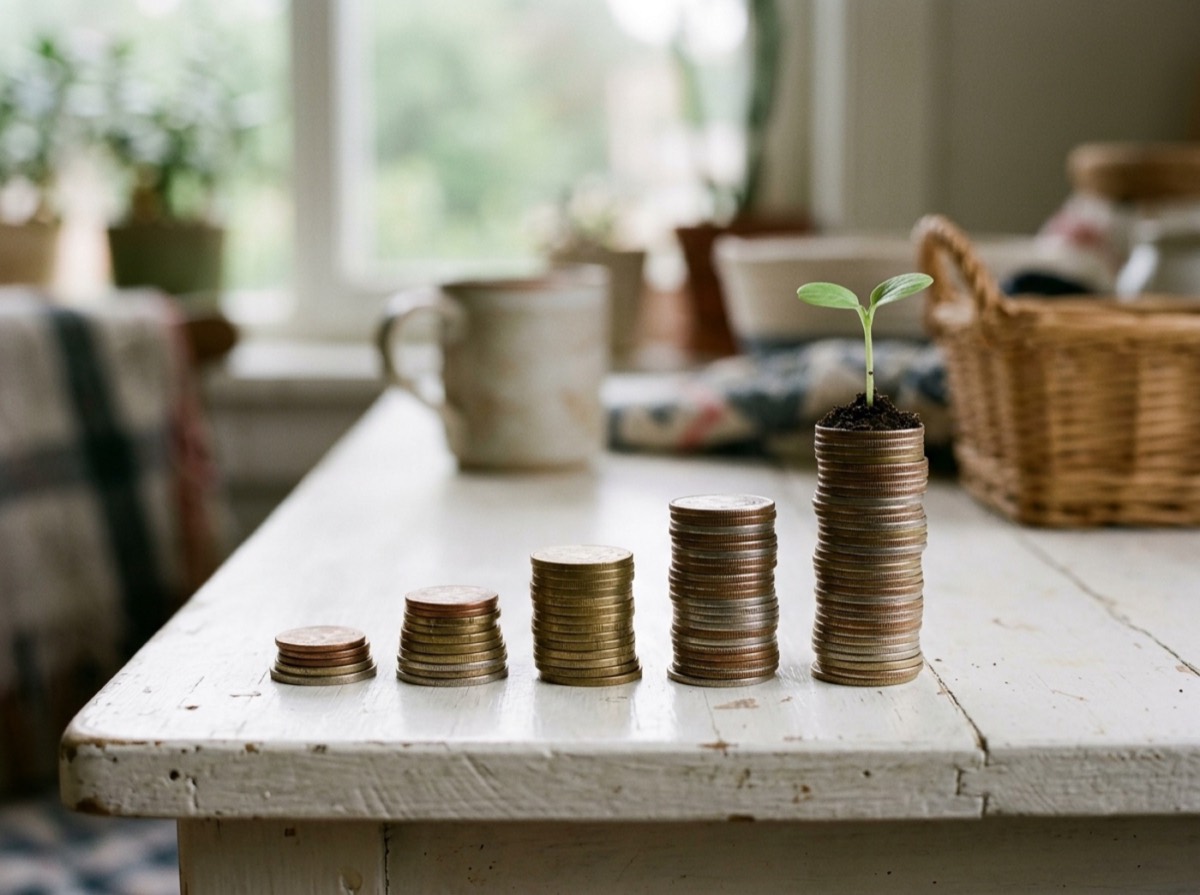
Set a savings goal with a picture and a target amount, and track progress on a chart. If you want to show how interest works, you can offer to add a small bonus to money that stays in the save jar for a month. It is a simple way to show that waiting pays.
- Compare prices together in the supermarket.
- Show how advertising tries to create wants.
- Let them pay for small items with their own money.
- Talk about the difference between cash and card: both are real money.
How to teach teenagers about budgeting and banking
Teenagers are ready for bigger responsibilities. Consider giving a monthly budget that covers things you would otherwise buy, such as clothes, phone top-ups or transport, so they learn to plan across weeks.
This is a good age for a youth bank account with a debit card and no overdraft. Go through a bank statement together and explain fees, direct debits and why online shopping and in-game purchases add up quickly.
Introduce bigger ideas too: what a payslip shows, how tax and social contributions are deducted, why borrowing costs money and how compound interest helps savers over long periods. Teens who have a part-time job can practise setting aside a share of every payment.
Common mistakes parents make
Most slip-ups come from good intentions. Bailing children out every time they run short removes the lesson. Using money as a reward for grades or as punishment can make it emotionally loaded. Keeping money a taboo topic leaves children to learn from friends and social media instead.
Being inconsistent is another one. If pocket money arrives irregularly, children cannot plan, and the whole exercise loses its value.
Frequently asked questions
At what age should you start teaching kids about money?
+
You can start as early as three or four with simple ideas like exchanging coins for things and waiting for something you want. Many basic money habits form by around seven, so the preschool and early school years are a good time to begin.
How much pocket money should a child get?
+
There is no fixed rule. It depends on age, what the money is expected to cover and what your family can afford. In Germany, youth welfare offices publish non-binding age-based tables that many parents use as a guide.
Should pocket money be tied to chores?
+
Many families give a basic allowance without conditions and treat daily chores as part of family life. Extra money can then be earned for larger, optional jobs, which shows the link between work and income.
When should a child get their own bank account?
+
Many parents open a youth account when a child starts receiving larger sums or reaches the early teens. Choose one without an overdraft and review the statements together at first.
What is the spend, save, give method?
+
It splits each amount of pocket money into three jars or envelopes: one for spending now, one for a savings goal and one for giving to others. It is a simple way to teach budgeting and priorities.
How do I explain needs vs wants to a child?
+
Use everyday examples. Food, a coat and school supplies are needs, while toys, sweets and games are wants. Ask them to sort items on a shopping list into the two groups.
Teaching children about money works best as an ongoing conversation rather than a single talk. Give them a regular amount, let them make choices and mistakes with it, and increase responsibility as they grow. The habits they build with small sums are the ones they will carry into their first job, their first flat and beyond.
How we research: Guides are written from established sources and checked for accuracy. They are general information, not professional advice.
Written by
Bitezine Editorial Team
Rankings, reviews & guides
Our editors research every piece from makers’ documentation, independent tests and owner reports, and update it when products change.