Living
How to start journaling and keep going
How to start journaling as a beginner: what to write about, how long to spend, which journaling methods to try and how to make it a lasting habit.
 Bitezine Editorial TeamRankings, reviews & guides 5 min read
 AI generated
If you want to know how to start journaling, the honest answer is: open a notebook and write a few lines today. There is no correct format, no minimum length and no need for good handwriting. A journal is a private place to think on paper, and its value comes from returning to it regularly.
What helps beginners most is a little structure. The sections below cover why people journal, which styles to try, what to write when your mind goes blank and how to turn an occasional entry into a habit.
What are the benefits of journaling?
Writing things down slows your thinking. Worries that feel large and tangled in your head often look smaller and more manageable once they are written as sentences. Many people use a journal to make decisions, notice patterns in their mood or simply clear their mind before sleep.
There is research behind this. In the 1980s, psychologist James Pennebaker began studying expressive writing, in which people write about difficult experiences for about fifteen minutes a day over several days. Participants in his studies went on to visit the doctor less often than control groups. Later research has produced mixed results, and some people feel worse immediately after writing about painful events, so it is not a substitute for professional help. Still, for many people regular writing is a low-cost way to process thoughts.
Gratitude journaling, where you note things that went well, has also been studied, with several experiments linking it to a more positive outlook.
What you need to start a journal
Very little. A notebook you like and a pen that writes smoothly are enough. Some people prefer a small notebook that fits in a bag; others want a larger page with room to think. A simple document on a computer works too, if typing feels more natural.
Keep your journal somewhere you will see it, such as on your bedside table or next to the coffee machine. Visibility is half the battle when forming any habit.
On hard days, one sentence still counts.
Types of journaling to try
Different methods suit different goals. Try one for two weeks before switching, and feel free to combine them.
- Free writing: write whatever comes to mind for a set time without stopping or editing.
- Morning pages: about three handwritten pages first thing in the morning to empty your head.
- Gratitude journal: list three specific things you are grateful for each day.
- Bullet journal: short bullet points for tasks, events and notes, with monthly and daily logs.
- Reflective journal: a few sentences each evening on what happened and what you learned.
- Prompt journal: answer one question a day from a list you prepare in advance.
- One-line-a-day journal: a single sentence each day, easy to keep for years.
What to write in a journal: prompts for beginners
A blank page can be intimidating. Prompts give you a starting point, and once you begin writing, the rest usually follows. Keep a list at the back of your notebook and pick one whenever you are stuck.
- What is on my mind right now?
- What went well today, and why?
- What is one thing I am worried about, and what could I do about it?
- What gave me energy this week, and what drained it?
- What would make tomorrow a good day?
- Who am I grateful for, and have I told them?
- What is a decision I keep putting off?
- What did I learn recently that surprised me?
How long should you journal each day?
Five to fifteen minutes is plenty for most people. Short sessions are easier to repeat, and repetition matters more than length. Some days you will write a paragraph, other days two pages.
Setting a timer can help. It gives you permission to stop, and it often pushes you to keep writing a little longer than you would otherwise, which is where the more useful thoughts tend to appear.
How to make journaling a daily habit
Attach journaling to something you already do every day. Write while your morning coffee cools, or right after brushing your teeth at night. A fixed moment removes the need to decide when to write.
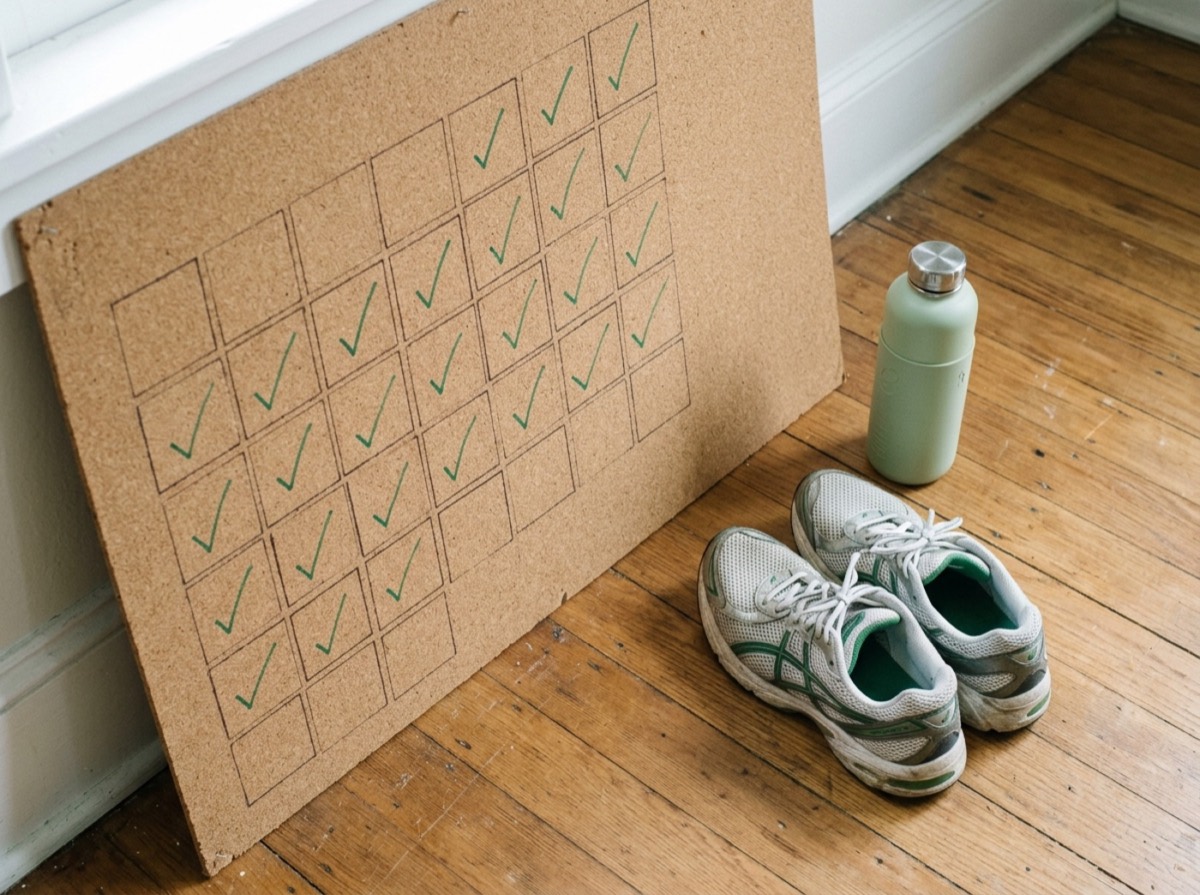
Lower the bar. Promise yourself only one sentence. On most days you will write more, and on hard days one sentence still counts. If you miss a day, do not try to catch up; just write today's entry.
Now and then, read back through older entries. Seeing how problems resolved and how your thinking changed is motivating, and it turns the journal from a diary into a tool.
Keeping your journal private
Honesty is easier when you know nobody else will read what you write. Keep the notebook in a drawer, or if you share a home, agree with others that journals are off limits. For digital journals, use a device lock and a strong password.
Remember that the journal is for you. Spelling, grammar and neatness do not matter, and you never have to show it to anyone.
Frequently asked questions
How do I start journaling for the first time?
+
Pick a notebook, choose a fixed time of day and write for five minutes about whatever is on your mind. If you get stuck, use a simple prompt such as what went well today. Keep the first entries short so the habit feels easy.
What should I write in my journal?
+
Anything that helps you think: events of the day, worries, goals, ideas or things you are grateful for. Prompts are useful when you do not know where to begin. There is no wrong content in a private journal.
Is it better to journal in the morning or at night?
+
Both work. Morning journaling helps you plan and clear your head before the day starts, while evening journaling helps you reflect and wind down. Choose the time you can keep most consistently.
Does journaling help with anxiety?
+
Many people find that writing down worries makes them feel more manageable, and research on expressive writing suggests some benefits. Results vary between people, though, and journaling does not replace support from a doctor or therapist.
How often should I journal?
+
Daily journaling builds the habit fastest, but a few times a week still brings benefits. Consistency matters more than length, so short regular entries beat occasional long ones.
What is the difference between a diary and a journal?
+
A diary usually records daily events, while a journal often goes further into thoughts, feelings, ideas and plans. In practice the words are used interchangeably, and your notebook can be both.
Knowing how to start journaling is less important than actually starting. Choose a notebook, pick a moment in your day, keep a few prompts ready and allow yourself to write badly. After a few weeks, the pages become a record of how you think, and a place you return to when you need clarity.
How we research: Guides are written from established sources and checked for accuracy. They are general information, not professional advice.
Written by
Bitezine Editorial Team
Rankings, reviews & guides
Our editors research every piece from makers’ documentation, independent tests and owner reports, and update it when products change.