Living
How to reduce food waste at home: a practical guide
How to reduce food waste at home: plan and shop smarter, understand use-by and best-before dates, store food correctly, freeze more and cook with leftovers.
 Bitezine Editorial TeamRankings, reviews & guides 6 min read
 AI generated
Learning how to reduce food waste at home is one of the simplest ways to save money and cut your environmental footprint at the same time. Households are the single largest source of food waste, which means everyday choices about shopping, storage and cooking really add up.
This guide explains why food waste matters, and then covers the habits that make the biggest difference: planning, smarter shopping, reading date labels correctly, storing and freezing food well, and turning leftovers into meals.
How much food do households waste?
According to the UN Environment Programme's Food Waste Index Report 2024, the world wasted about 1.05 billion tonnes of food in 2022, roughly 132 kilograms per person and almost a fifth of all food available to consumers. Households were responsible for 60 per cent of that, ahead of food service and retail.
In the European Union, Eurostat estimates about 130 kilograms of food waste per inhabitant for 2023, with households producing just over half of it, around 69 kilograms per person. Some of that waste, such as bones and peel, cannot be eaten, but a large share is food that was bought and never used.
Why is food waste bad for the environment?
Wasted food carries the hidden cost of everything that went into producing it: land, water, fertiliser, energy for processing and transport, and packaging. UNEP estimates that food loss and waste account for 8 to 10 per cent of global greenhouse gas emissions, several times the share of aviation.
Food sent to landfill also breaks down without oxygen and releases methane, a potent greenhouse gas. Cutting waste at home reduces demand for food that is never eaten and saves money on your grocery bill.
The cheapest food in your kitchen is the food you already bought and actually eat.
Plan meals and shop smarter
Most household food waste starts in the shop. Buying without a plan leads to duplicates, impulse purchases and fresh food that goes off before you get to it.
Before you shop, check the fridge, freezer and cupboards, and plan meals around what needs using up. Write a list and stick to it. Be realistic about how often you will cook, and leave room for evenings out or leftovers. Multi-buy offers only save money if you will eat the food in time or can freeze it.
- Take a quick photo of your fridge before shopping
- Plan three to five dinners rather than the whole week
- Choose recipes that share ingredients
- Buy loose fruit and vegetables so you can pick the exact amount
- Shop more often for fresh produce if you tend to over-buy
Use-by vs best-before: what's the difference?
Confusion over date labels is a well-known cause of waste. The European Commission has estimated that up to 10 per cent of the food waste generated in the EU each year is linked to date marking.
A use-by date is about safety. It appears on highly perishable foods such as fresh meat, fish and some dairy products, and you should not eat the food after that date, even if it looks and smells fine. A best-before date is about quality. Food is usually safe after this date if stored correctly and the packaging is intact, although it may lose some flavour or texture. Use your senses to judge best-before foods such as dry pasta, rice, tins, biscuits and many frozen foods.
Always follow storage instructions on the pack, such as keeping food refrigerated or eating it within a certain number of days after opening.
How to store food so it lasts longer
Correct storage can add days, sometimes weeks, to fresh food. Keep the fridge at 5°C or below, and do not overfill it, because cold air needs to circulate.
Some produce stays fresher outside the fridge, while other items last much longer inside it. Fruits such as apples and bananas release ethylene, a natural gas that speeds up ripening, so storing them apart from other produce helps slow spoilage.
- Fridge: most fruit including apples, berries and grapes; leafy greens, carrots, peppers and broccoli; opened jars
- Room temperature: bananas, whole tomatoes for flavour, and unripe avocados and stone fruit until ripe
- Cool, dark and dry: potatoes, onions and garlic, stored separately from each other
- Herbs: soft herbs stand in a glass of water; hard herbs wrap loosely in a damp paper towel
- Bread: room temperature for a few days, or sliced and frozen for longer
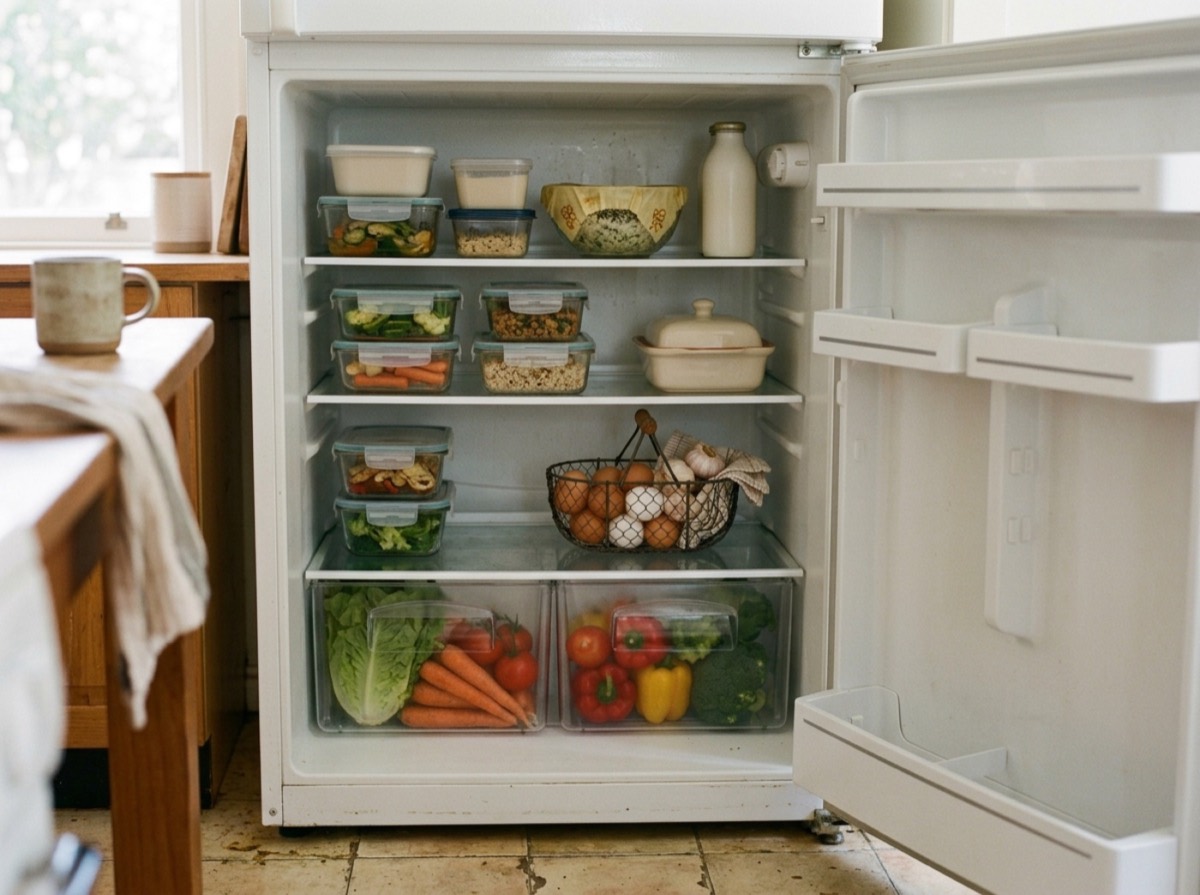
Organize the fridge using first in, first out
Food that gets pushed to the back is food that gets forgotten. When you unpack shopping, move older items to the front and put new ones behind them. Keep a clear eat-me-first box or shelf for leftovers, opened packets and produce that needs using soon.
Transparent containers make it easy to see what you have, and a short list on the fridge door of what needs eating helps the whole household. Store raw meat and fish sealed on the bottom shelf and ready-to-eat food above.
What foods can you freeze?
The freezer is your best tool against waste. Far more foods freeze well than most people think, and freezing pauses spoilage until you are ready to cook. Freeze food before its use-by date, label it with the contents and date, and thaw it in the fridge.
Some foods change texture when frozen. Lettuce, cucumber and other watery salad vegetables go limp, and soft cheese and mayonnaise-based dishes can separate. They are better eaten fresh.
- Bread, rolls and wraps, ideally sliced
- Cooked grains, soups, stews and sauces
- Raw and cooked meat and fish, well wrapped
- Grated hard cheese, butter and milk
- Ripe bananas, berries and chopped fruit for smoothies or baking
- Chopped herbs in a little oil in ice cube trays
- Chopped onions, peppers and blanched vegetables
Cook with leftovers and scraps
Cook the right amount to begin with by measuring rice and pasta portions. When there are leftovers, cool them quickly, refrigerate them within two hours and eat them within a couple of days, or freeze them.
Flexible recipes are perfect for using up odds and ends. Soups, frittatas, fried rice, pasta bakes, curries and smoothies can absorb small amounts of almost anything. Stale bread makes breadcrumbs, croutons or bread pudding. Vegetable trimmings and peels can be simmered into stock. Whatever cannot be eaten, such as coffee grounds, eggshells and peel, is better composted or placed in a food waste bin than sent to landfill.
Frequently asked questions
What is the easiest way to reduce food waste at home?
+
Check what you already have before shopping, buy only what you plan to use, and freeze food you will not eat in time. These three habits prevent a large share of household waste without much extra effort.
Is it safe to eat food after the best-before date?
+
Usually yes, as long as it has been stored correctly and the packaging is not damaged. Best-before dates relate to quality, so check how the food looks, smells and tastes. Never eat food after its use-by date, which is about safety.
How long can you keep leftovers in the fridge?
+
Advice varies by country: UK guidance suggests eating leftovers within about two days, while US guidance allows three to four days. Cooked rice is riskier and is best eaten within a day. Freeze leftovers you will not eat in time.
Why is food waste a problem?
+
Wasted food means wasted money and wasted land, water and energy used to produce it. UNEP estimates food loss and waste cause 8 to 10 per cent of global greenhouse gas emissions, and food in landfill releases methane as it breaks down.
Which foods are wasted the most at home?
+
Fresh foods with a short shelf life are among the most commonly wasted, especially bread, fresh vegetables, fruit, salad, dairy and leftovers. These are also the foods that benefit most from better storage and freezing.
Can you freeze bread and milk?
+
Yes. Bread freezes well, and slicing it first lets you toast slices straight from frozen. Milk can be frozen in a container with some space at the top, then thawed in the fridge and shaken before use.
Reducing food waste at home does not need special equipment, only a few steady habits: plan before you shop, read date labels correctly, store food where it lasts longest, freeze generously and treat leftovers as ingredients. Start with one change, such as a weekly fridge check or an eat-me-first shelf, and build from there. The savings show up on your grocery bill quickly, and the environmental benefit grows with every meal you do not throw away.
How we research: Guides are written from established sources and checked for accuracy. They are general information, not professional advice.
Written by
Bitezine Editorial Team
Rankings, reviews & guides
Our editors research every piece from makers’ documentation, independent tests and owner reports, and update it when products change.