Living
How to organize a small kitchen: space-saving ideas that work
How to organize a small kitchen: declutter first, set up work zones, use vertical and cabinet space, tame the fridge and pantry, and keep counters clear.
 Bitezine Editorial TeamRankings, reviews & guides 6 min read
 AI generated
Learning how to organize a small kitchen is mostly about two things: owning less and using every centimetre of space on purpose. A compact kitchen can be a pleasure to cook in when everything has a home and the tools you use daily are within reach.
This guide walks through a practical order: decluttering, setting up work zones, making use of walls and cabinet interiors, organizing the fridge and pantry, and keeping the counters clear for good.
Start by decluttering your kitchen
No storage trick can fit too much into too little space. Empty one cupboard at a time and ask of each item: when did I last use this, and do I have something else that does the same job? Duplicate spatulas, rarely used gadgets, chipped mugs and stacks of takeaway tubs are the usual culprits.
Check food as you go. Throw away anything past its use-by date, combine half-open packets of the same thing and put items to eat soon at the front. Move seasonal or occasional items, such as a roasting tin used twice a year or holiday baking moulds, to a higher shelf or another room altogether.
- Keep: things you use at least every week or two
- Relocate: occasional items that can live higher up or elsewhere
- Donate: duplicates and gadgets you never reach for
- Discard: broken items, lids without containers, expired food
Set up kitchen zones for how you cook
Professional kitchens are organized in stations, and the same idea works at home. Store things where you use them, so you rarely need to cross the room while cooking.
In a narrow or galley kitchen, zones may be only an arm's length apart, but the principle still saves steps. Put the items you use every day at the height between your shoulders and knees, and reserve the hardest-to-reach spots for things you use least.
- Prep zone: knives, chopping boards, mixing bowls and measuring tools near your main counter
- Cooking zone: pans, spatulas, oils and spices beside the hob
- Cleaning zone: dish soap, cloths, bin bags and the rubbish bin by the sink
- Storage zone: food containers, foil and wraps near the fridge
- Serving zone: plates, glasses and cutlery close to the dishwasher or where you eat
In a small kitchen, every item should earn its place by how often it is used, not by how nice it looks.
Use vertical and wall space
When floor and counter space are limited, go up. Walls, the backsplash and the sides of cupboards are prime storage in a small kitchen.
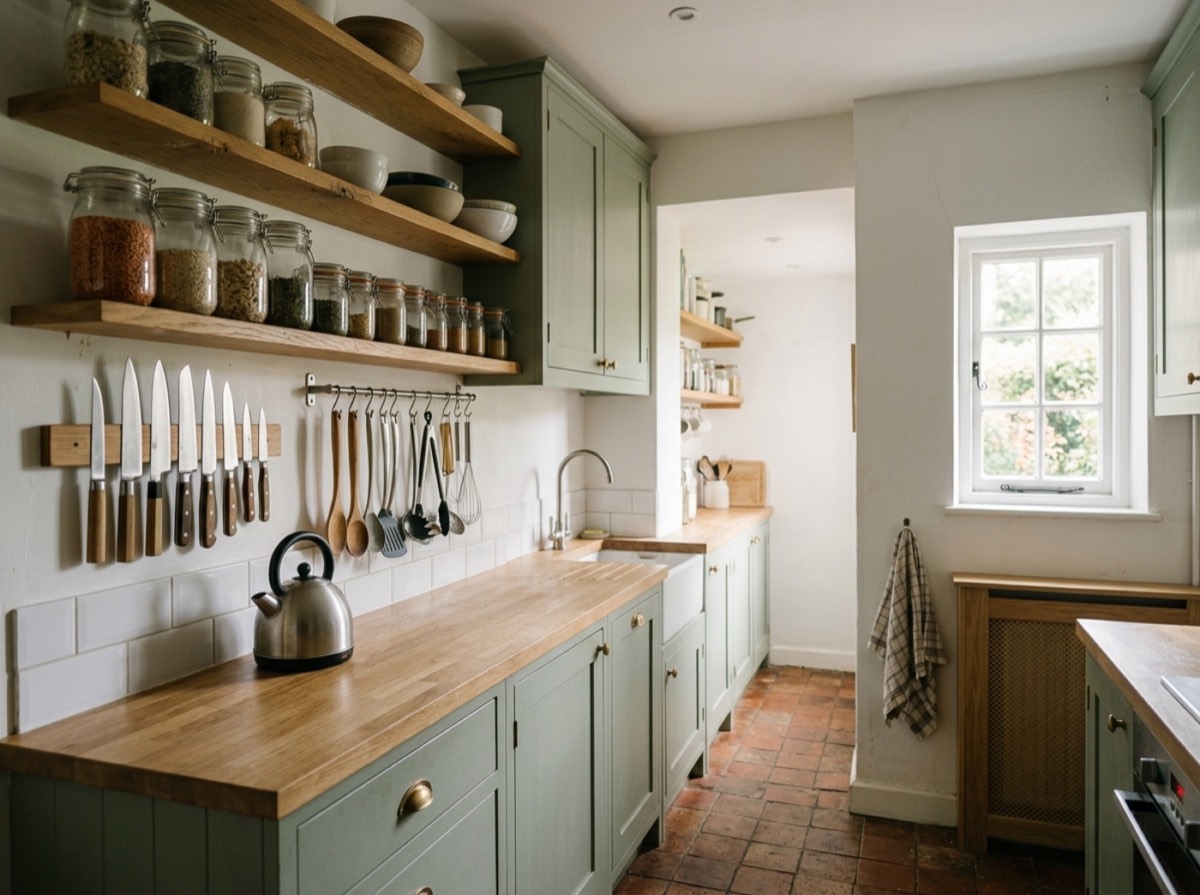
A magnetic knife strip frees a drawer and keeps knives sharp and safe. A rail with hooks can hold utensils, mugs or small pans. Open shelves above the counter store everyday plates and glasses, but keep them for items you use often, because anything left there collects grease and dust. In a rental, look for adhesive hooks, over-the-door racks and tension rods that do not need drilling.
How to organize kitchen cabinets and drawers
Most cupboards waste the space above the items on each shelf. Shelf risers and stackable racks double the usable surface for plates, bowls and cans. Deep base cabinets become easier to use with pull-out baskets or simple boxes you can slide out like drawers.
Store baking trays, chopping boards and lids upright with a file-style organizer so you can pull one out without lifting the whole stack. Nest mixing bowls and measuring cups, and keep only a few pan sizes you actually use.
Drawer dividers stop small tools from turning into a tangle. Keep one drawer for everyday cutlery, one for cooking tools and, if you have space, one for wraps and bags. The space under the sink suits a two-tier rack and a tension rod for hanging spray bottles.
- Shelf risers for plates and mugs
- Upright organizers for trays, boards and pan lids
- Pull-out bins for deep cupboards
- A rotating tray for oils and sauces in corners
- Door-mounted racks for spices, foil and cling film
Organizing a small kitchen with no pantry
Without a pantry, food storage needs to be compact and visible. Clear, stackable, airtight containers make it easy to see what you have and use shelf height well. Square or rectangular shapes waste less space than round ones.
A tall, slim rolling cart can slide into the gap beside the fridge or between an appliance and the wall. A shelf or cabinet in a hallway can act as overflow storage for bulk items. Group food by type, such as breakfast, baking, grains and tins, and keep a small basket for snacks so they do not spread across every shelf. Label shelves or containers so everyone in the household puts things back in the same place.
Keep the fridge and freezer organized
A tidy fridge saves space and food. Keep ready-to-eat food and leftovers on upper shelves, raw meat and fish sealed on the bottom shelf where they cannot drip, and vegetables in the drawers. Keep the fridge at 5°C or below.
Use clear bins to group small items like yoghurts, sauces and cheese, and put the oldest food at the front. In the freezer, freeze food flat in bags and file them upright like books, labelled with the contents and date, so you can see everything at a glance.
How to keep kitchen counters clear
Clear counters make a small kitchen feel larger and give you room to cook. Decide which appliances truly earn a permanent spot. A kettle or coffee machine used daily may stay, while a mixer or toaster used once a week can live in a cupboard.
Give everything else a home. A single tray can corral oil, salt and pepper by the hob, and a wall-mounted rack can hold kitchen roll and a dish towel. Add a sink cover or an over-the-sink chopping board when you need extra prep space, and look for a fold-down wall table or a kitchen cart with a worktop if you need more room regularly.
Habits that keep a small kitchen organized
Organization only lasts when daily habits support it. Clean as you cook, empty the dishwasher first thing, and do a quick counter reset every evening. Follow a one in, one out rule for gadgets and mugs.
Every few months, take ten minutes to check the fridge, pantry and one cupboard. Small, regular resets are far easier than a full kitchen overhaul once clutter has built up again.
Frequently asked questions
How do I organize a small kitchen with limited space?
+
Declutter first, then store items in zones based on where you use them. Make use of walls, cupboard doors and shelf height with hooks, rails, risers and slim racks, and keep counters for daily essentials only.
Where should I put pots and pans in a small kitchen?
+
Keep them in a deep drawer or cupboard next to the hob, with lids stored upright in an organizer. Hanging a few frequently used pans on a wall rail or hooks frees cupboard space, and nesting pans saves even more.
How can I add storage to a small kitchen without renovating?
+
Use shelf risers, door-mounted racks, a magnetic knife strip, a slim rolling cart and adhesive hooks. Over-the-sink boards and fold-down tables add work space without any building work, which also suits rentals.
What should I keep on my kitchen counter?
+
Only items you use every day, such as a kettle or coffee machine, a knife block or a utensil holder, and perhaps a small tray with oil and salt. Store appliances you use weekly or less in cupboards to free space.
How do I organize a kitchen with no pantry?
+
Use clear, stackable containers, group food by type in labelled baskets, and add vertical storage such as a slim rolling cart or a tall shelf. Store bulk items and extras outside the kitchen if you have space in a hallway cupboard.
What goes in upper vs lower kitchen cabinets?
+
Upper cabinets suit lighter everyday items such as plates, glasses, mugs and dry food. Lower cabinets and drawers are better for heavy items like pots, pans, small appliances and cleaning supplies. Rarely used items go on the highest shelves.
Organizing a small kitchen does not require a renovation. Clear out what you do not use, store items in zones near where you use them, make the most of walls, doors and shelf height, and keep the counters for daily essentials. With a few simple habits to keep it that way, even a very compact kitchen can feel calm, practical and easy to cook in.
How we research: Guides are written from established sources and checked for accuracy. They are general information, not professional advice.
Written by
Bitezine Editorial Team
Rankings, reviews & guides
Our editors research every piece from makers’ documentation, independent tests and owner reports, and update it when products change.