Living
How to meal prep for the week: a simple system for beginners
Learn how to meal prep for the week in about two hours: plan a short menu, shop once, batch-cook smart building blocks and store everything safely.
 Bitezine Editorial TeamRankings, reviews & guides 7 min read
 AI generated
Learning how to meal prep for the week is less about perfect plastic boxes and more about making fewer food decisions on busy days. Two focused hours on a weekend can cover most lunches and several dinners, cut last-minute takeaway orders and shrink the amount of food that goes off in the fridge.
This guide walks through a system that works for beginners: choosing a realistic menu, shopping once, cooking in an efficient order, and storing meals so they stay safe and still taste good on day four.
What is meal prep, and which style suits you?
Meal prep simply means cooking or preparing food ahead of time so that weekday meals take minutes. There is no single right way to do it, and the style you pick decides how much time you spend and how varied your week feels.
Most people end up mixing two of the styles below. Beginners usually do best with ingredient prep plus one or two batch-cooked dishes, because it keeps flexibility without a full day in the kitchen.
- Full meals in portions: complete lunches or dinners boxed and ready to reheat. Best for people who want zero thinking at noon.
- Batch cooking: one large pot of chili, curry or soup, split into portions for the fridge and freezer.
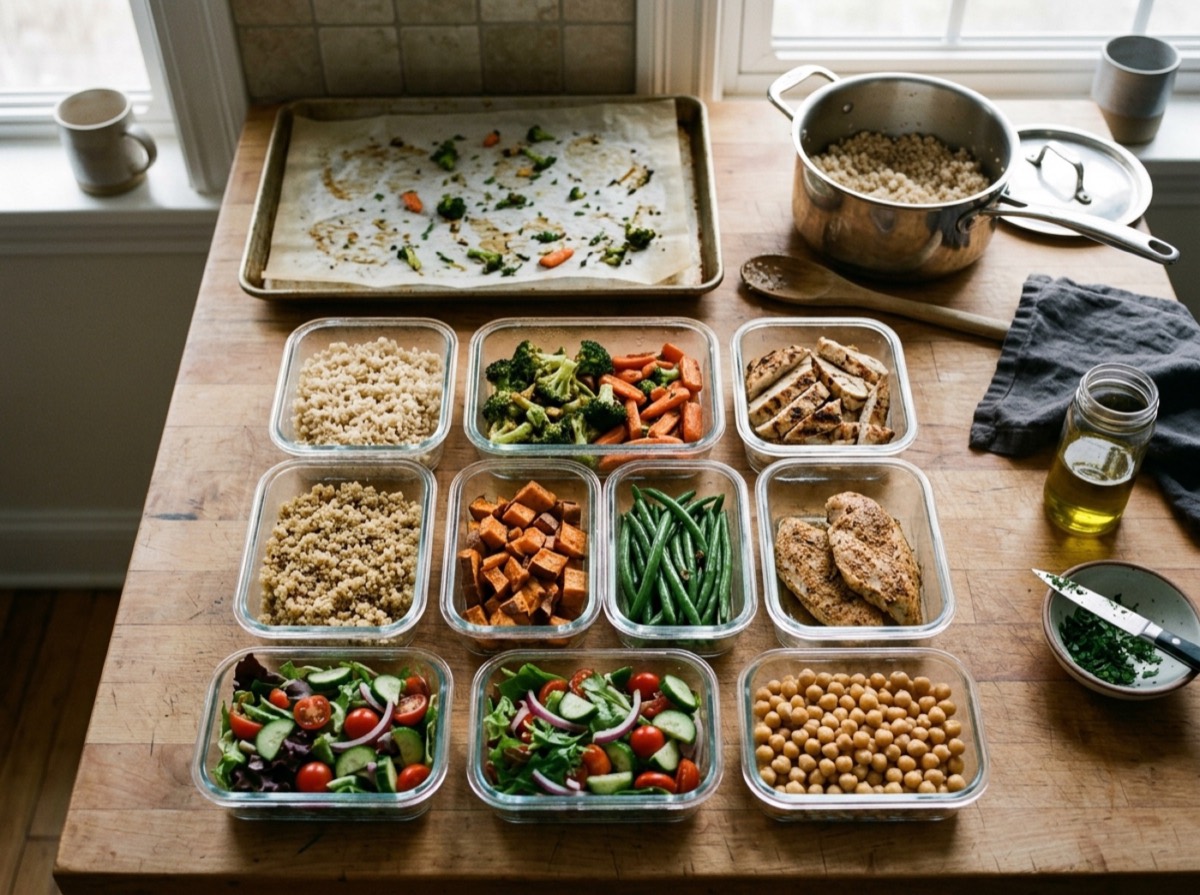
- Ingredient prep: cooked grains, roasted vegetables, a protein and a sauce that you combine differently each day.
- Prep-ahead components: washed salad, chopped onions, marinated meat or tofu, so cooking on the night takes 15 minutes.
Step 1: Plan a short, realistic weekly menu
Start small. Plan four or five lunches and three dinners rather than every meal of the week. Leave room for leftovers, a meal out and the evening when plans change.
Pick recipes that share ingredients. If you roast a tray of peppers, courgettes and onions, they can go into a grain bowl on Monday, a wrap on Tuesday and a pasta sauce on Thursday. Shared ingredients mean a shorter shopping list and less waste.
Check your calendar before you plan. A late meeting on Wednesday is a good reason to have a freezer portion ready, while a free Friday is the night for something fresh.
- One or two grains or starches: rice, quinoa, potatoes, pasta or bulgur
- Two proteins: for example chicken thighs and lentils, or eggs and chickpeas
- Two trays of vegetables: one roasted, one raw and crunchy
- One or two sauces or dressings to change the flavour through the week
The best meal prep plan is the one you still follow in week six, not the most ambitious one in week one.
Step 2: Write a meal prep shopping list and shop once
Before you write the list, check what is already in the fridge, freezer and cupboard. Building meals around what you have saves money and stops half-used jars from piling up.
Group the list by store section so the trip is quick. Buy hardy vegetables such as carrots, cabbage, peppers and broccoli for later in the week, and plan delicate greens and soft fruit for the first few days.
Step 3: Batch cook in the right order
The trick to a two-hour session is running several things at once. Start with whatever takes longest and needs the least attention, then fill the waiting time with chopping and assembly.
Clear the dishwasher and the counter before you begin, and wash up as you go. Ending the session with a clean kitchen is what makes you willing to do it again next week.
- Preheat the oven and put on a pot of grains or potatoes.
- Roast one or two trays of vegetables and a tray of protein at the same time.
- While the oven works, cook a pot of soup, stew or lentils on the hob.
- Chop raw vegetables, wash salad leaves and dry them well.
- Mix one or two sauces or dressings and store them in small jars.
- Let hot food cool briefly, then portion and refrigerate it.
How long does meal prep last in the fridge?
Food safety is the part many beginners skip. Guidance varies by country: the US Department of Agriculture advises eating cooked leftovers within three to four days, while UK health advice is stricter and suggests about two days. Cooked rice deserves extra care and is best eaten within a day. If you prep on Sunday, a sensible rule is to refrigerate meals for Monday to Wednesday and freeze the rest.
Cool food quickly and get it into the fridge within two hours of cooking. Spreading food into shallow containers helps it cool faster. Keep the fridge at 5°C or colder, and reheat food until it is steaming hot all the way through. Label each box with the date so nobody has to guess.
Which meals freeze well, and which do not?
Freezing is what turns meal prep from a three-day plan into a full week. Soups, stews, curries, chili, bolognese-style sauces, cooked beans, meatballs, burritos and baked oats all freeze and reheat well.
Some foods lose their texture in the freezer. Raw salad leaves, cucumber, cooked pasta in thin sauces, boiled potatoes and anything with a lot of mayonnaise are better made fresh or eaten early in the week. Freeze portions flat in bags or in individual boxes so you can take out exactly what you need, and move tomorrow's portion to the fridge the night before to thaw.
Choosing meal prep containers
Glass containers with snap lids are sturdy, do not hold on to smells and can usually go in the oven or microwave without the lid. They are heavier to carry, though. Good-quality plastic boxes are lighter and cheaper; check that they are marked as safe for the microwave and freezer, and avoid microwaving food in scratched or cloudy plastic.
Divided containers keep wet and crisp ingredients apart. Small jars for dressings stop salads from going soggy. Whatever you choose, pick one or two sizes that stack neatly, because a tidy fridge makes it easy to see what needs eating first.
How to meal prep without getting bored
Eating the same box five days in a row is the most common reason people give up. Cooking neutral building blocks and changing the flavour at the last moment solves most of it.
The same rice, roasted vegetables and chickpeas can become a lemon and herb bowl, a spicy wrap with yoghurt sauce, or a quick fried rice with an egg on top. Rotate your recipes every few weeks, and keep a short list of the meals your household actually enjoyed so planning gets faster over time.
Frequently asked questions
How long does it take to meal prep for the week?
+
A beginner session for four to five lunches and a few dinners usually takes around two hours, including washing up. It gets faster once you repeat recipes and learn to run the oven and hob at the same time.
Is meal prep for 5 days safe?
+
Keeping cooked meals in the fridge for five days goes beyond common food safety advice, which ranges from about two days in the UK to three to four days in the US. Refrigerate the first few days' meals and freeze the rest, then thaw each portion in the fridge the night before.
What are the best foods for meal prep?
+
Foods that hold their texture work best: grains like rice and quinoa, roasted vegetables, beans and lentils, chicken thighs, hard-boiled eggs, soups and stews. Keep dressings separate and add delicate greens on the day.
Can you meal prep on a budget?
+
Yes, meal prep is one of the most reliable ways to spend less on food. Build meals around cheap staples such as lentils, oats, eggs, frozen vegetables and seasonal produce, use what you already have first, and buy larger packs of ingredients you use in several recipes.
Should I freeze or refrigerate meal prep?
+
Refrigerate what you will eat in the next two to three days and freeze everything else. Soups, stews, curries and sauces freeze very well, while salads and crisp vegetables should stay in the fridge.
Do you reheat meal prep in the container?
+
You can if the container is microwave-safe, but remove or loosen the lid first. Stir halfway through and heat until the food is steaming hot in the centre. Many people prefer to reheat food on a plate or in glass rather than in plastic.
Meal prep for the week does not have to be a big production. Start with a short menu, a single shopping trip and a two-hour cooking session built around a few flexible ingredients. Store food safely, freeze what you will not eat soon, and change the sauces to keep things interesting. After a few weeks, the routine becomes the easiest part of your week rather than another chore.
How we research: Guides are written from established sources and checked for accuracy. They are general information, not professional advice.
Written by
Bitezine Editorial Team
Rankings, reviews & guides
Our editors research every piece from makers’ documentation, independent tests and owner reports, and update it when products change.