Living
How to clean your home faster: speed-cleaning methods that work
How to clean your home faster: a room-by-room order, a portable caddy, the top-to-bottom rule, daily resets and tricks that cut weekly cleaning time.
 Bitezine Editorial TeamRankings, reviews & guides 6 min read
 AI generated
If you want to clean your home faster, the secret is not scrubbing harder but working in a smarter order. Professional cleaners move through a home in a fixed sequence, carry everything they need with them and let cleaning products sit while they do something else. The same approach can cut a weekly clean down to an hour or two.
This guide shows how to set up a speed-cleaning kit, the order that avoids doing jobs twice, room-by-room shortcuts and the small daily habits that stop mess from building up.
Declutter before you clean
Cleaning is slow when every surface is covered. Wiping around piles of post, toys and cups takes far longer than wiping an empty counter. Start with a quick pickup: take a laundry basket or large bag through the home and gather everything that does not belong in each room.
Do not stop to put each item away one by one, which leads to endless walking back and forth. Collect first, clean, then return the items in one trip at the end. Set a timer for ten minutes so the tidy-up does not swallow the whole session.
Build a cleaning caddy so you never go looking
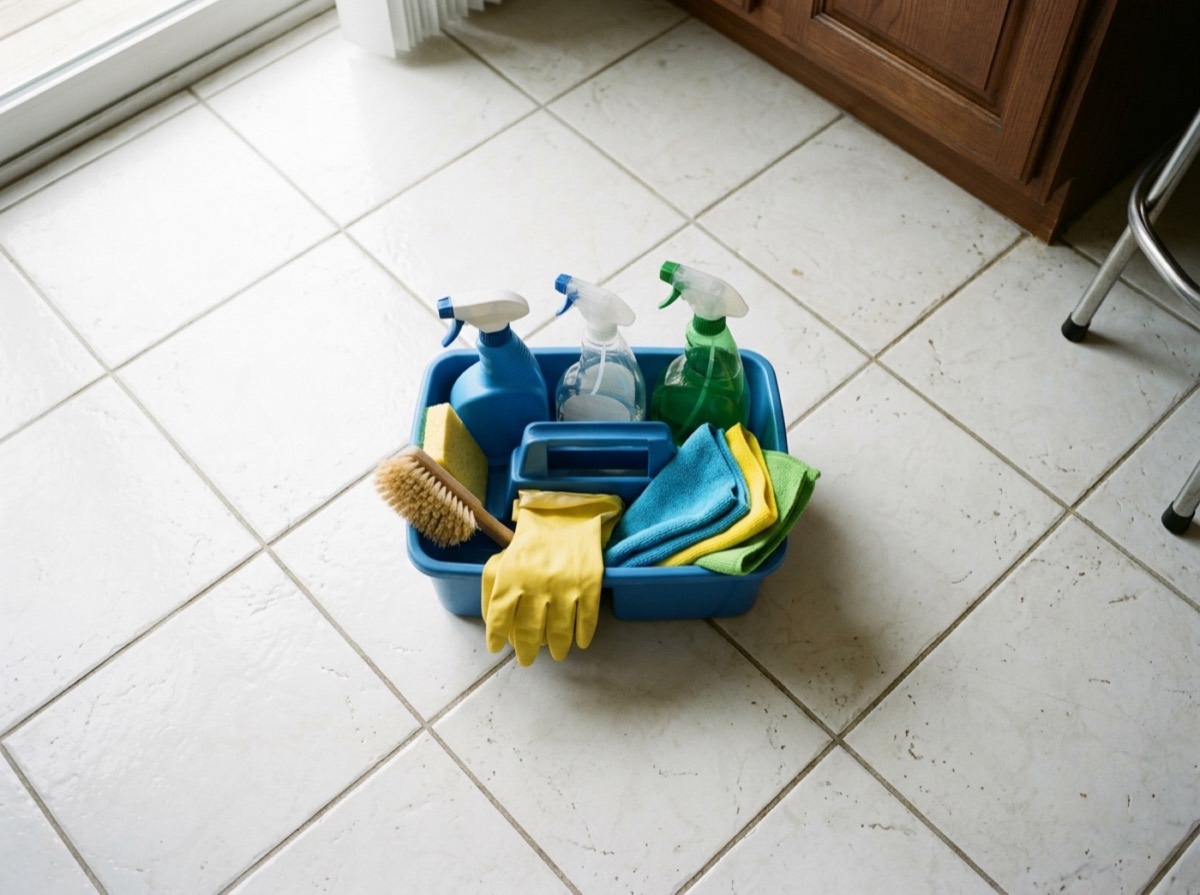
Much of the time spent cleaning is actually spent searching for a cloth or walking back to the cupboard. A caddy with the essentials lets you carry your kit from room to room. Keep it stocked and store it somewhere easy to reach.
If you live over several floors, a second basic kit on each level saves many trips up and down the stairs.
- An all-purpose cleaner for most hard surfaces
- A bathroom cleaner or descaler for limescale
- A glass cleaner, or a mix of water and a little vinegar
- Several microfibre cloths in different colours for kitchen, bathroom and dusting
- A scrub brush and an old toothbrush for corners and grout
- A duster with an extendable handle
- Rubber gloves and a small bin bag
The fastest clean starts with a spray bottle and a pause, not with a scrubbing brush.
What order should you clean a room in?
Work from top to bottom and from dry to wet. Dust falls as you clean, so start with high shelves, light fittings and the tops of cupboards, then move to counters and tables, and finish with the floor. Dusting and vacuuming come before mopping, otherwise you end up pushing crumbs around in water.
Within a room, move in one direction, clockwise or anticlockwise, so you never cross back over a clean area. Across the home, finish each task type for several rooms at once where it makes sense. Vacuuming every room in one pass, for example, is faster than switching tools in each room.
- Pick up clutter and strip beds if needed
- Spray products that need time to work, such as in the toilet, shower and hob
- Dust from high to low
- Wipe surfaces, mirrors and fixtures
- Scrub and rinse the areas you sprayed earlier
- Vacuum, then mop, working toward the door
Let cleaning products do the work
Dwell time is one of the biggest time savers in cleaning. Most cleaners and descalers need a few minutes on a surface to loosen grime, and disinfectants often need a specific contact time listed on the label to work properly. Spraying and immediately wiping means more scrubbing and weaker results.
Use this to your advantage. Spray the bathroom first, then dust the bedroom while it soaks. Pour a little cleaner into the microwave's steam bowl or soak greasy hob parts while you do the rest of the kitchen. When you come back, the dirt comes off with a quick wipe. Never mix different cleaning products, especially bleach with ammonia or acids, because it can release harmful gases.
Room-by-room speed cleaning shortcuts
Each room has a few tasks that make the biggest visual difference. When time is short, focus on those and leave deeper jobs for a separate session.
- Kitchen: empty the sink and dishwasher first, clear counters, wipe the hob and fronts of appliances, then the floor
- Bathroom: spray the toilet, sink and shower first, wipe the mirror, then scrub and rinse and finish with the floor
- Living room: tidy cushions and throws, dust surfaces, vacuum, including under the sofa edge
- Bedroom: make the bed first, since a made bed makes the whole room look tidy, then dust and vacuum
- Entrance: shake out the mat and put away shoes, because it is the first thing anyone sees
How to clean the house in an hour
A full home clean in 60 minutes is realistic for a small or medium flat if you stick to the visible essentials. Set a timer for each block so you keep moving, and resist the urge to deep-clean one spot.
A rough split: ten minutes for the clutter pickup, fifteen for the kitchen, ten for the bathroom, ten for dusting the living areas and bedrooms, and fifteen for vacuuming and a quick mop of the kitchen and bathroom floors. Music or a podcast helps keep the pace up.
Use daily resets to keep weekly cleaning short
The fastest clean is the one that starts with a mostly tidy home. A 10 to 15-minute reset each evening prevents mess from turning into a weekend project. Many households find it easier to share these small daily tasks than one big clean.
Some habits take seconds but save a lot of effort later: wiping the shower glass after use, rinsing dishes straight away, and handling post when it arrives. Doing one small extra task a day, such as the fridge shelves on Monday and skirting boards on Tuesday, spreads deeper cleaning across the week.
- Load or run the dishwasher and wipe the counters
- Put items back where they live
- Quick wipe of the bathroom sink
- Take out full bins
- Set out anything you need for the next morning
Tools that make cleaning faster
Good tools pay for themselves in time saved. Microfibre cloths pick up dust and grime with just water in many cases, and colour-coding them avoids moving bathroom germs to the kitchen. A lightweight cordless vacuum encourages quick daily passes, while a flat mop with washable pads covers floors faster than a bucket and string mop.
Keep tools in good shape: wash cloths regularly, empty the vacuum bin before it is full and replace worn brushes. Blunt tools make every job slower.
Frequently asked questions
What is the fastest way to clean a house?
+
Declutter first, carry a caddy with all your supplies, spray products that need soaking time before you start, and work top to bottom and dry to wet. Doing the same task across several rooms at once, such as vacuuming, also saves time.
What order should I clean my house in?
+
Start with a quick tidy, then dust high surfaces, wipe counters and fixtures, and finish with floors, vacuuming before mopping. Many people clean the kitchen and bathrooms first because they take longest and benefit from soaking time.
How long should it take to clean a house?
+
A regular clean of a small or medium flat can take around one to two hours, depending on size and how tidy it is to begin with. Deep cleaning takes much longer. Daily 15-minute resets keep the weekly clean at the shorter end.
How can I motivate myself to clean?
+
Set a timer for a short burst, such as 15 minutes, and start with a task that shows quick results, like making the bed or clearing the sink. Music or a podcast helps, and splitting the work across the week feels less overwhelming than one long session.
Should you dust or vacuum first?
+
Dust first. Dust and crumbs fall to the floor as you clean higher surfaces, so vacuuming last picks everything up in one pass.
How often should you clean your house?
+
Most homes benefit from a light daily tidy, a weekly clean of kitchens, bathrooms and floors, and deeper tasks such as windows, the oven and inside the fridge every few weeks or months. Adjust to your household size, pets and allergies.
Cleaning your home faster is mostly about removing wasted steps. Clear the clutter, keep your supplies in one caddy, work top to bottom and dry to wet, and give products time to do the heavy lifting. Add a short daily reset and the weekly clean shrinks to something you can finish before lunch, leaving more of your weekend for everything else.
How we research: Guides are written from established sources and checked for accuracy. They are general information, not professional advice.
Written by
Bitezine Editorial Team
Rankings, reviews & guides
Our editors research every piece from makers’ documentation, independent tests and owner reports, and update it when products change.