Living
How to care for a new puppy: the first weeks at home
How to care for a new puppy: what to buy, the first night, feeding, toilet training, vaccinations, socialisation and the routines that help a puppy settle.
 Bitezine Editorial TeamRankings, reviews & guides 6 min read
 AI generated
Learning how to care for a new puppy before the day you bring it home makes the first weeks far easier for both of you. Puppies need a lot: frequent meals, constant toilet trips, plenty of sleep, gentle training and safe new experiences. None of it is complicated, but all of it needs to happen consistently.
This guide covers what to buy, how to handle the first night, feeding, toilet training, vet care, socialisation and the everyday routine that helps a puppy grow into a relaxed, well-mannered dog.
New puppy checklist: what to buy before day one
Have the basics ready before your puppy arrives so the first days can focus on settling in. Ask the breeder or shelter what food the puppy is currently eating and buy the same one.
- The same puppy food it is used to, plus food and water bowls
- A bed and, if you plan to use one, a crate sized for the adult dog with a divider
- A soft collar or harness, a lead and an ID tag
- Chew toys of different textures
- Enzyme cleaner for accidents, which removes odours that attract repeat mistakes
- Small, soft training treats
- A puppy-safe brush and nail clippers
- Baby gates to block off stairs or rooms
Puppy-proof your home
Puppies explore with their mouths. Get down to their height and look for hazards: loose cables, shoes, small objects, cleaning products, medicines and bins. Move houseplants out of reach until you have checked that they are not toxic to dogs.
Several common foods are dangerous for dogs, including chocolate, grapes and raisins, onions and garlic, alcohol, and products containing the sweetener xylitol. Keep them well out of reach and make sure visitors and children know not to share snacks.
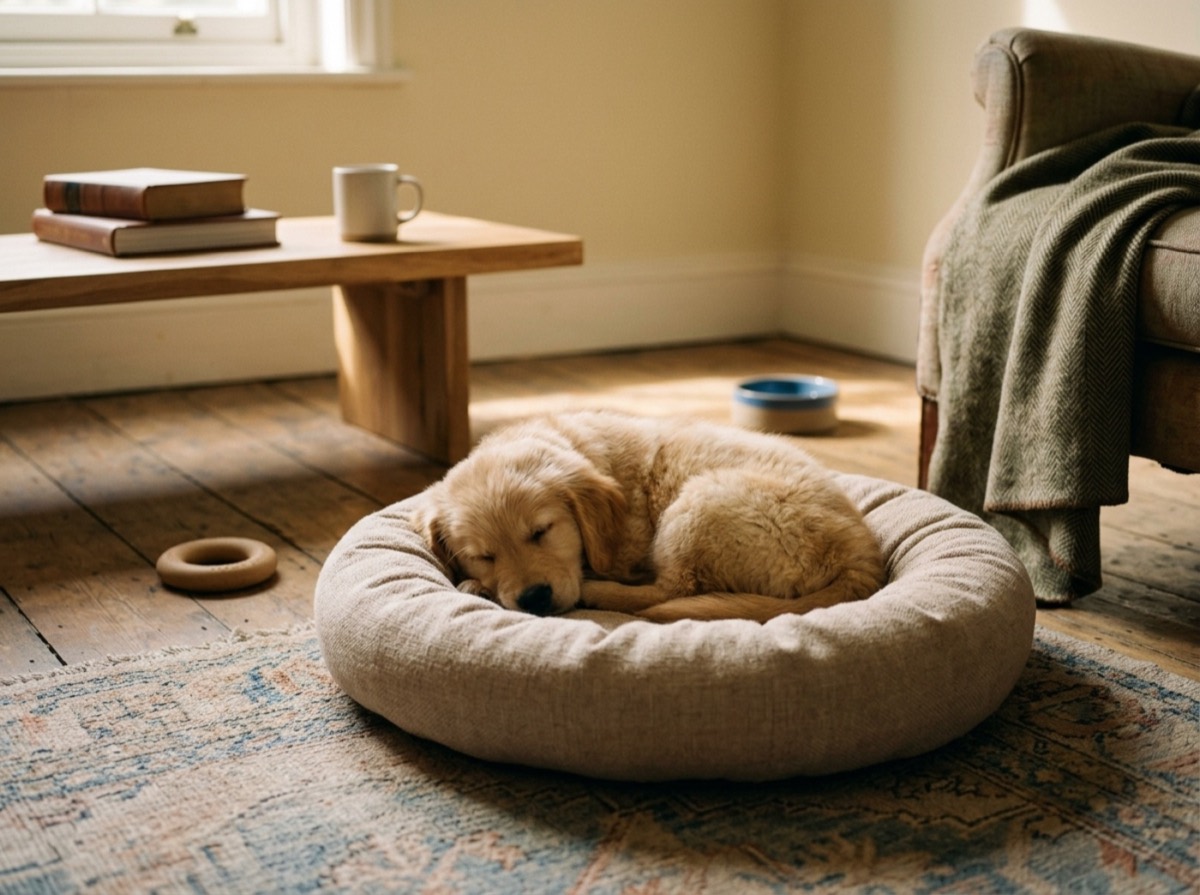
Positive experiences in the first months help a puppy grow into a confident adult dog.
Your puppy's first night at home
Leaving its mother and littermates is a big change, so some crying on the first nights is normal. Many trainers suggest placing the puppy's bed or crate near your bed at first, so it can hear and smell you. You can gradually move it to its permanent spot over the following weeks.
Take the puppy outside to the toilet just before bed. Young puppies usually cannot hold on through the whole night, so expect one or two quiet trips outside. Keep these calm and brief, with no play, then straight back to bed. A warm, covered bed and an item that smells of the litter can help it settle.
How often should you feed a puppy?
Puppies have small stomachs and high energy needs. A common guide is four small meals a day from about eight to twelve weeks, three meals a day until around six months, and two meals a day after that. Follow the feeding guide on a complete puppy food and adjust with your vet's advice as your puppy grows.
If you want to change food, do it gradually over about a week by mixing increasing amounts of the new food with the old. Fresh water should always be available. Keep treats small and count them as part of the daily food allowance.
How to toilet train a puppy
Toilet training is about timing and praise. Take your puppy outside to the same spot often, especially at the moments when it is most likely to need to go. Wait calmly, and when it goes, praise warmly and offer a treat straight away.
Accidents indoors will happen. Never punish them, since that teaches the puppy to hide from you when it needs to go. Clean the spot with an enzyme cleaner and take the puppy out more often. Most puppies become reliable over several months, though every dog is different.
- First thing in the morning and last thing at night
- After every meal and drink
- After waking from a nap
- After play or excitement
- At least every hour or two while awake at first
Vet visits, vaccinations and parasite control
Book a vet check within the first few days. The vet will examine your puppy, discuss a vaccination plan and set up worming and flea treatment. Ask about microchipping if it has not been done; it is a legal requirement for dogs in a number of countries.
Core vaccines protect against serious diseases such as parvovirus, distemper and canine hepatitis, and in many countries rabies. Puppies typically start their course at around six to eight weeks, with boosters every few weeks until they are at least 16 weeks old, followed by a booster later. The exact schedule depends on your vet and where you live. Ask when your puppy can safely walk in public areas and meet unfamiliar dogs.
How to socialise a puppy
The first few months are when puppies adapt most easily to new sights, sounds, people and places. Positive experiences during this period help prevent fear and anxiety later. Even before full vaccination, you can carry your puppy to watch traffic, invite calm visitors home and let it meet healthy, vaccinated dogs you know, following your vet's advice.
Introduce new things gradually and keep each experience short and pleasant. Pair them with treats and let the puppy approach at its own pace. Useful experiences include different floor surfaces, household noises like the vacuum cleaner, being handled on the paws and ears, car trips, and people of different ages and appearances. Puppy classes are a good way to practise in a structured setting.
Sleep, play and gentle training
Puppies need a lot of sleep, often 18 hours or more a day. An overtired puppy is more likely to bite and get overexcited, so build regular naps into the day in a quiet spot. Short play sessions and short walks are better than long, tiring outings while the joints are still developing.
Start simple training early with rewards: responding to its name, sit, come and settling on a bed. Keep sessions to a few minutes. Puppy biting is normal; when teeth touch skin, stop the game briefly and redirect to a chew toy. Consistency from everyone in the household makes training much faster.
Frequently asked questions
What should I do the first day I bring my puppy home?
+
Keep things calm. Show the puppy its toilet spot first, then its bed and water, and let it explore a small area. Limit visitors, start your routine for meals and toilet trips, and let it sleep as much as it needs.
How do I stop my puppy crying at night?
+
Place its bed near yours at first, take it to the toilet just before bed and provide a warm, cosy sleeping spot. Respond calmly to genuine toilet needs but keep night trips quiet and boring. Most puppies settle within a week or two.
When can my puppy go outside for walks?
+
Usually shortly after its vaccination course is complete, but the timing varies by vaccine and region, so ask your vet. Before then you can use your own garden if it is safe and carry your puppy out to experience the world.
How long does it take to toilet train a puppy?
+
Many puppies are mostly reliable within a few months, though some take longer. Frequent trips outside, immediate praise and calm clean-ups without punishment speed up the process.
How much should a puppy sleep?
+
Young puppies commonly sleep 18 hours or more a day. Give them a quiet place to nap and build rest periods into the day, as tired puppies tend to bite and misbehave.
How do I stop my puppy from biting?
+
When teeth touch skin, pause the game for a moment, then offer a chew toy instead. Avoid rough play with hands, make sure the puppy gets enough sleep and reward calm behaviour.
Caring for a new puppy is a daily routine of small things: regular meals, frequent toilet trips, plenty of sleep, vet care and short, positive training and socialisation. Get those right in the first weeks and months, and you give your puppy the best chance of growing into a confident, happy adult dog.
How we research: Guides are written from established sources and checked for accuracy. They are general information, not professional advice.
Written by
Bitezine Editorial Team
Rankings, reviews & guides
Our editors research every piece from makers’ documentation, independent tests and owner reports, and update it when products change.